


GRI Contents
GRI 3.12
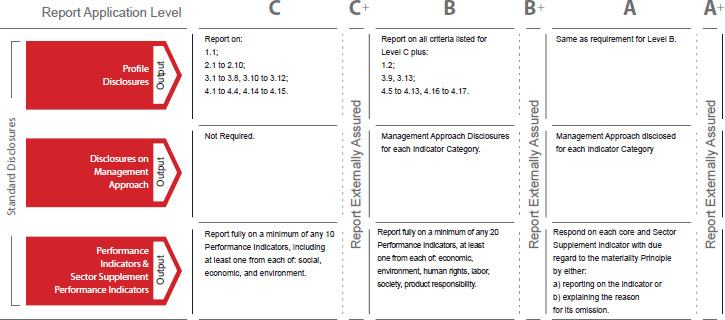
EcoRodovias states that this is a level C report, meeting all profile indicators required for said level. The report also includes 62 performance indicators that were fully complied with, while two were partially complied with.
| 1. STRATEGY AND ANALYSIS | Pages RS | |
| 1.1 | Statement from the most senior decisionmaker of the organization (e.g., CEO, chair, or equivalent senior position) about the relevance of sustainability to the organization and its strategy. | 02 |
| 1.2 | Description of key impacts, risks, and opportunities. | 03, 11, 16, 23, 36 |
| 2. ORGANIZATIONAL PROFILE | Pages RS | |
| 2.1 | Name of the organization. | 01 |
| 2.2 | Primary brands, products, and/or services. | 01 |
| 2.3 | Operational structure of the organization, including main divisions, operating companies, subsidiaries, and joint ventures. | 01 |
| 2.4 | Location of organization's headquarters. | 50 |
| 2.5 | Number of countries where the organization operates, and names of countries with either major operations or that are specifically relevant to the sustainability issues covered in the report. | 01 |
| 2.6 | Nature of ownership and legal form. | 01 |
| 2.7 | Markets served (including geographic breakdown, sectors served, and types of customers/beneficiaries). | 01 |
| 2.8 | Scale of the reporting organization. | 03 |
| 2.9 | Significant changes during the reporting period regarding size, structure, or ownership. | 01 |
| 2.10 | Awards received in the reporting period. | 10 |
| 3. REPORT PARAMETERS | ||
| 3.1 | Reporting period (e.g., fiscal/calendar year) for information provided. | 01 |
| 3.2 | Date of most recent previous report (if any). | 01 |
| 3.3 | Reporting cycle (annual, biennial, etc.). | 01 |
| 3.4 | Contact point for questions regarding the report or its contents. | 01 |
| 3.5 | Process for defining report content, including: • Determining materiality; • Prioritizing topics within the report; and • Identifying stakeholders the organization expects to use the report. | 01 |
| 3.6 | Boundary of the report (e.g., countries, divisions, subsidiaries, leased facilities, joint ventures, suppliers). See GRI Boundary Protocol for further guidance. |
01 |
| 3.7 | State any specific limitations on the scope or boundary of the report. | 01 |
| 3.8 | Basis for reporting on joint ventures, subsidiaries, leased facilities, outsourced operations, and other entities that can significantly affect comparability from period to period and/or between organizations. | 01 |
| 3.10 | Explanation of the effect of any re-statements of information provided in earlier reports, and the reasons for such re-statement (e.g., mergers/acquisitions, change of base years/periods, nature of business, measurement methods). |
01 |
| 3.11 | Significant changes from previous reporting periods in the scope, boundary, or measurement methods applied in the report. | 01 |
| 3.12 | Table identifying the location of the Standard Disclosures in the report. | 49 |
| 3.13 | Policy and current practice with regard to seeking external assurance for the report. | 01 |
| 4. GOVERNANCE, COMMITMENTS, AND ENGAGEMENT | ||
| 4.1 | Governance structure of the organization, including committees under the highest governance body responsible for specific tasks, such as setting strategy or organizational oversight. | 03 , 04, 05, 06, 07, 08, 09, 10 |
| 4.2 | Indicate whether the Chair of the highest governance body is also an executive officer (and, if so, their function within the organization's management and the reasons for this arrangement). | 05 |
| 4.3 | For organizations that have a unitary board structure, state the number of members of the highest governance body that are independent and/or non-executive members. | 05 |
| 4.4 | Mechanisms for shareholders and employees to provide recommendations or direction to the highest governance body. | 05 |
| 4.6 | Processes in place for the highest governance body to ensure conflicts of interest are avoided. | 05 |
| 4.7 | Process for determining the qualifications and expertise of the members of the highest governance body for guiding the organization's strategy on economic, environmental, and social topics. | 05 |
| 4.8 | Internally developed statements of mission or values, codes of conduct, and principles relevant to economic, environmental, and social performance and the status of their implementation. | 02 |
| 4.11 | Explanation of whether and how the precautionary approach or principle is addressed by the organization. | 07 |
| 4.12 | Externally developed economic, environmental, and social charters, principles, or other initiatives to which the organization subscribes or endorses. | 01, 37, 46 |
| 4.13 | Memberships in associations (such as industry associations) and/or national/international advocacy organizations in which the organization: • Has positions in governance bodies; • Participates in projects or committees; • Provides substantive funding beyond routine membership dues; or • Views membership as strategic. | 44 |
| 4.14 | List of stakeholder groups engaged by the organization. | 38 to 44 |
| 4.15 | Basis for identification and selection of stakeholders with whom to engage. | 1, 36 |
| 4.16 | Approaches to stakeholder engagement, including frequency of engagement by type and by stakeholder group. | 38 to 44 |
| 4.17 | Key topics and concerns that have been raised through stakeholder engagement, and how the organization has responded to those key topics and concerns, including through its reporting. | 38 to 44 |
| ECONOMIC PERFORMANCE INDICATORS | |||
| ASPECT: ECONOMIC PERFORMANCE | Pages RS | ||
| CORE | EC1 | Direct economic value generated and distributed, including revenues, operating costs, employee compensation, donations and other community investments, retained earnings, and payments to capital providers and governments. | 01, 30, 31 |
| CORE | EC2 | Financial implications and other risks and opportunities for the organization's activities due to climate change. | 07 |
| CORE | EC3 | Coverage of the organization's defined benefit plan obligations. | 37 |
| ASPECT: MARKET PRESENCE | |||
| ADD | EC5 | Range of ratios of standard entry level wage compared to local minimum wage at significant locations of operation. | 37 |
| CORE | EC6 | Policy, practices, and proportion of spending on locally-based suppliers at significant locations of operation. | 40 |
| CORE | EC7 | Procedures for local hiring and proportion of senior management hired from the local community at locations of significant operation. | 37 |
| ASPECT: INDIRECT ECONOMIC IMPACTS | |||
| CORE | EC8 | Development and impact of infrastructure investments and services provided primarily for public benefit through commercial, inkind, or pro bono engagement. | 21 |
| ADD | EC9 | Understanding and describing significant indirect economic impacts, including the extent of impacts. | 42, 45 |
| ENVIRONMENTAL PERFORMANCE INDICATORS | |||
| ASPECT: MATERIALS | |||
| CORE | EN1 | Materials used by weight or volume. | 17 |
| CORE | EN2 | Percentage of materials used that are recycled input materials. | 44 |
| ASPECT: ENERGY | |||
| CORE | EN3 | Direct energy consumption by primary energy source. | 44 |
| CORE | EN4 | Indirect energy consumption by primary source. | 44 |
| ADD | EN5 | Energy saved due to conservation and efficiency improvements. | 44 |
| ADD | EN7 | Initiatives to reduce indirect energy consumption and reductions achieved. | 44 |
| ASPECT: WATER | |||
| CORE | EN8 | Total water withdrawal by source. | 44 |
| ADD | EN10 | Percentage and total volume of water recycled and reused. | 44 |
| ASPECT: BIODIVERSITY | |||
| CORE | EN11 | Location and size of land owned, leased, managed in, or adjacent to protected areas and areas of high biodiversity value outside protected areas. | 45 |
| CORE | EN12 | Description of significant impacts of activities, products, and services on biodiversity in protected areas and areas of high biodiversity value outside protected areas. | 45 |
| ADD | EN14 | Strategies, current actions, and future plans for managing impacts on biodiversity. | 45 |
| ADD | EN15 | Number of IUCN Red List species and national conservation list species with habitats in areas affected by operations, by level of extinction risk. | 45 |
| ASPECT: EMISSIONS, EFFLUENTS, AND WASTE | |||
| CORE | EN16 | Total direct and indirect greenhouse gas emissions by weight. | 44 |
| CORE | EN17 | Other relevant indirect greenhouse gas emissions by weight. | 44 |
| ADD | EN18 | Initiatives to reduce greenhouse gas emissions and reductions achieved. | 44 |
| CORE | EN22 | Total weight of waste by type and disposal method. | 44 |
| CORE | EN23 | Total number and volume of significant spills. | 44 |
| ASPECT: PRODUCTS AND SERVICES | |||
| CORE | EN26 | Initiatives to mitigate environmental impacts of products and services, and extent of impact mitigation. | 17, 44, 45 |
| ASPECT: COMPLIANCE | |||
| CORE | EN28 | Monetary value of significant fines and total number of non-monetary sanctions for noncompliance with environmental laws and regulations. | 45 |
| ASPECT: OVERALL | |||
| ADD | EN30 | Total environmental protection expenditures and investments by type. | 45 |
| LABOR PRACTICES AND DECENT WORK PERFORMANCE INDICATORS | |||
| ASPECT: EMPLOYMENT | |||
| CORE | LA1 | Total workforce by employment type, employment contract, and region. | 36 |
| CORE | LA2 | Total number and rate of employee turnover by age group, gender, and region. | 37 |
| ADD | LA3 | Benefits provided to full-time employees that are not provided to temporary or part-time employees, by major operations. | 37 |
| ASPECT: LABOR/MANAGEMENT RELATIONS | |||
| CORE | LA4 | Percentage of employees covered by collective bargaining agreements. | 37 |
| CORE | LA5 | Minimum notice period(s) regarding operational changes, including whether it is specified in collective agreements. | 37 |
| ASPECT: OCCUPATIONAL HEALTH AND SAFETY | |||
| ADD | LA6 | Percentage of total workforce represented in formal joint management-worker health and safety committees that help monitor and advise on occupational health and safety programs. | 37 |
| CORE | LA7 | Rates of injury, occupational diseases, lost days, and absenteeism, and number of workrelated fatalities by region. | 37 |
| CORE | LA8 | Education, training, counseling, prevention, and risk-control programs in place to assist workforce members, their families, or community members regarding serious diseases. | 37, 42 |
| ADD | LA9 | Health and safety topics covered in formal agreements with trade unions. | 37 |
| ASPECT: TRAINING AND EDUCATION | |||
| CORE | LA10 | Average hours of training per year per employee by employee category. | 37 |
| ADD | LA11 | Programs for skills management and lifelong learning that support the continued employability of employees and assist them in managing career endings. | 37 |
| ADD | LA12 | Percentage of employees receiving regular performance and career development reviews. | 37 |
| ASPECT: DIVERSITY AND EQUAL OPPORTUNITY | |||
| CORE | LA13 | Composition of governance bodies and breakdown of employees per category according to gender, age group, minority group membership, and other indicators of diversity. | 37 |
| CORE | LA14 | Ratio of basic salary of men to women by employee category. | 37 |
| HUMAN RIGHTS PERFORMANCE INDICATORS | |||
| ASPECT: INVESTMENT AND PROCUREMENT PRACTICES | |||
| CORE | HR1 | Percentage and total number of significant investment agreements that include human rights clauses or that have undergone human rights screening. | 40 |
| CORE | HR2 | Percentage of significant suppliers and contractors that have undergone screening on human rights and actions taken. | 40 |
| ADD | HR3 | Total hours of employee training on policies and procedures concerning aspects of human rights that are relevant to operations, including the percentage of employees trained. | Cover |
| ASPECT: NON-DISCRIMINATION | |||
| CORE | HR4 | Total number of incidents of discrimination and actions taken. | 37 |
| ASPECT: FREEDOM OF ASSOCIATION AND COLLECTIVE BARGAINING CORE | |||
| ASPECT: CHILD LABOR | |||
| CORE | HR6 | Operations identified as having significant risk for incidents of child labor, and measures taken to contribute to the elimination of child labor. | 40 |
| ASPECT: FORCED AND COMPULSORY LABOR | |||
| CORE | HR7 | Operations identified as having significant risk for incidents of forced or compulsory labor, and measures to contribute to the elimination of forced or compulsory labor. | 40 |
| ASPECT: SECURITY PRACTICES | |||
| ADD | HR8 | Percentage of security personnel trained in the organization's policies or procedures concerning aspects of human rights that are relevant to operations. | 40 |
| ASPECT: INDIGENOUS RIGHTS | |||
| ADD | HR9 | Total number of incidents of violations involving rights of indigenous people and actions taken. | 42 |
| SOCIETY PERFORMANCE INDICATORS | |||
| ASPECT: COMMUNITY | |||
| CORE | SO1 | Nature, scope, and effectiveness of any programs and practices that assess and manage the impacts of operations on communities, including entering, operating, and exiting. | 42 |
| ASPECT: CORRUPTION | |||
| CORE | SO2 | Percentage and total number of business units analyzed for risks related to corruption. | 02 |
| CORE | SO3 | Percentage of employees trained in organization's anti-corruption policies and procedures. | 02 |
| CORE | SO4 | Actions taken in response to incidents of corruption. | 02 |
| ASPECT: PUBLIC POLICY | |||
| CORE | SO5 | Public policy positions and participation in public policy development and lobbying. | 17, 45 |
| ADD | SO6 | Total value of financial and in-kind contributions to political parties, politicians, and related institutions by country. | 38 |
| ASPECT: ANTI-COMPETITIVE BEHAVIOR | |||
| ADD | SO7 | Total number of legal actions for anticompetitive behavior, anti-trust, and monopoly practices and their outcomes. | 38 |
| ASPECT: COMPLIANCE | |||
| CORE | SO8 | Public policy positions and participation in public policy development and lobbying. | 38, 39 |
| PRODUCT RESPONSIBILITY PERFORMANCE INDICATORS | |||
| ASPECT: CUSTOMER HEALTH AND SAFETY | |||
| CORE | PR1 | Life cycle stages in which health and safety impacts of products and services are assessed for improvement, and percentage of significant products and services categories subject to such procedures. | 22 |
| ADD | PR2 | Total number of incidents of noncompliance with regulations and voluntary codes concerning health and safety impacts of products and services during their life cycle, by type of outcomes. | 38 |
| ASPECT: PRODUCT AND SERVICE LABELING | |||
| ADD | PR5 | Practices related to customer satisfaction, including results of surveys measuring customer satisfaction. | 38 |
| ASPECT: CMARKETING COMMUNICATIONS | |||
| CORE | PR6 | Programs for adherence to laws, standards, and voluntary codes related to marketing communications, including advertising, promotion, and sponsorship. | 36 |
| ADD | PR7 | Total number of incidents of noncompliance with regulations and voluntary codes concerning marketing communications, including advertising, promotion, and sponsorship by type of outcomes. | 36 |
| ASPECT: COMPLIANCE | |||
| CORE | PR9 | Monetary value of significant fines for noncompliance with laws and regulations concerning the provision and use of products and services. | 38 |