



The management of corporate risks is fundamental to the sustainable growth of the business. Therefore, EcoRodovias makes use of a variety of methodologies and tools in order to identify, assess, mitigate and monitor the risks, adhering to a business philosophy based on an integrated vision of Corporate Governance, Risk Management and Compliance.
The Risk Management Process conducted at EcoRodovias is in alignment with the IBGC's (Brazilian Corporate Governance Institute's) Risk Management Guide issued by the Brazilian Corporate Governance Institute (IBGC) as well as with ISO 31000, both of which are guidelines that address principles and best practices for Corporate Risk Management.
At EcoRodovias, the management of corporate risks is an ongoing process that flows throughout the Organization, conducted by professionals at all levels and which is applied to the definition of the company's strategies. This process includes the prior identification, by means of a proper information system, along with the listing of the main risks to which the organization is exposed, together with the probability of their occurrence and their impact, as well as the measures and plans adopted to prevent or minimize them, so as to provide the highest possible degree of assurance to the Company's Board of Directors and its Executive Board regarding the achievement of its objectives. This process seeks to incorporate risk management into strategic planning, and into management by processes and the management of projects, in a way that is relevant, effective and efficient.
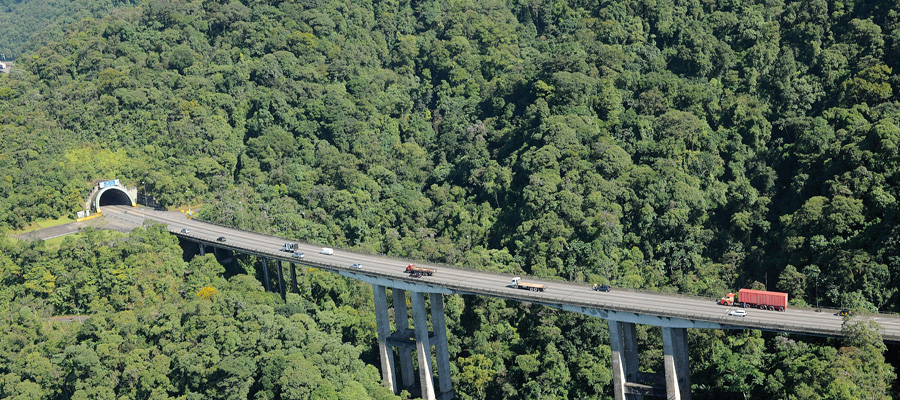
Risks are classified in accordance with their nature and type. Classification according to their nature (strategic, financial and operational) allows the aggregation of risks based on the areas of the Organization that are affected by the events; classification by type is aimed at ensuring a common risk language within the organization such as, for instance, Engineering Risks, risks related to the highway's geological and construction aspects (civil construction projects, paving, works of art, signaling etc.). Well aware of the climatic issue, the engineering department carries out a variety of geological and rainfall level studies and monitoring exercises of the highways located on the hillsides of the Serra do Mar mountain ranges). This management is aimed at minimizing the occurrence of instabilities, establishing programmed prevention or correction actions in relation to the anomalies that may lead to serious occurrences. The Company also takes out insurance policies that cover damage to property, loss of revenue, engineering and civil liability risks.
 Ecovias_ Imigrantes
Strategic Risks are associated with decisions taken by senior management and are those risks which can result in the greatest loss of economic value for the Organization.
Financial Risks (market, credit and liquidity) are those in connection with the exposure of the Organization's financial operations. This is the risk that the Company's cash-flows are not properly managed in such a way as to maximize the generation of operating cash, manage the specific risks and returns of the financial transactions, raise and invest financial funds, in accordance with the established policies.
For their part, the Operating Nature Risks are associated with the possibility of the occurrence of losses (of assets, clients, revenues) resulting from flaws, defects or unsuitable internal processes, people and systems, as well as from external events (natural catastrophes, frauds, strikes or terrorist acts). These risks generally entail the total or partial reduction, degradation or interruption of the Company's business activities with a negative impact on its reputation, as well as the possible generation of contractual, regulatory and environmental liabilities.